
Valgeir Gudbjartsson
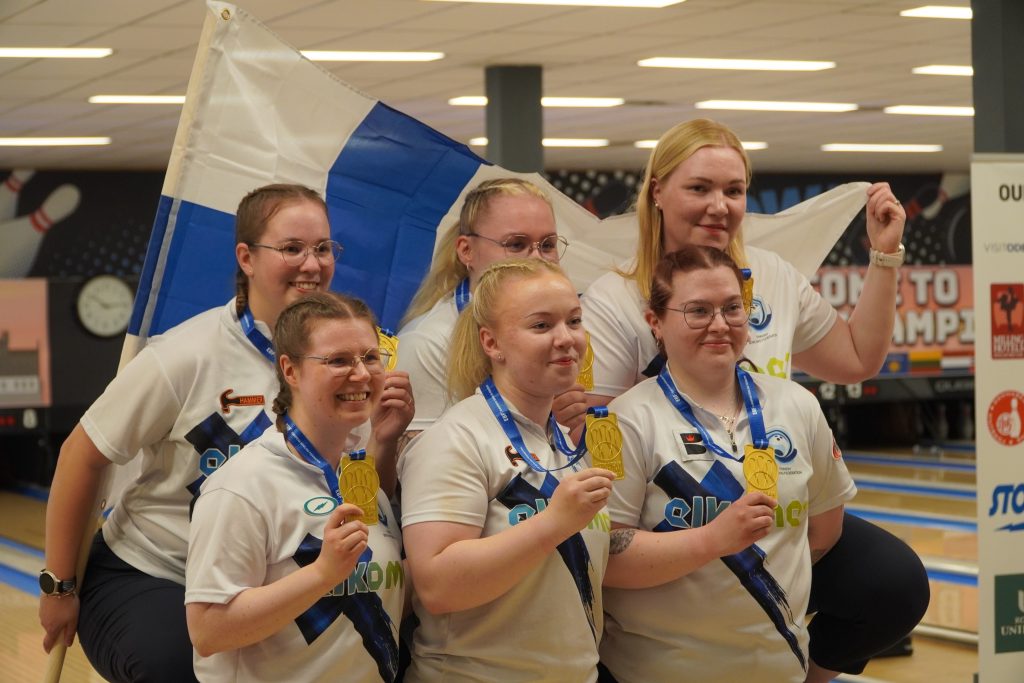
Odense, Denmark – The European Women’s Championship continued in spectacular fashion last night, delivering high drama and outstanding performances as the team competition reached its climax.
Fans were treated to a series of intense and exciting matches in both the semifinals and the final, showcasing top-level skill and determination from Europe’s best players. After a gripping finale, Finland emerged victorious to claim the Gold medal, demonstrating exceptional teamwork and composure under pressure. Germany secured the Silver medal, while Denmark and Sweden shared the Bronze, each delivering strong performances throughout the competition.
In addition to the team event, the championship also concluded the all-event medal standings, recognizing consistent excellence across disciplines. Finland once again dominated the podium, with Essi Pakarinen taking Gold and Peppi Konsteri earning Silver. Nora Johanson of Sweden claimed the Bronze, highlighting the high level of competition across the field.
The championship will conclude today with the highly anticipated Master Competition, where the top players will compete for the final title of the event.
The European Women’s Championship in Odense continues to celebrate elite performance, sportsmanship, and the growing strength of women’s competition across Europe.
Odense, Denmark — June 17, 2026 — The European Womens Championship in Odense saw two thrilling days of competition in the trio event, held on June 16 and 17, delivering high-quality performances and dramatic finishes that captivated players and spectators alike.
Following a series of intense and closely contested matches, Germany secured the gold medal with a standout performance, demonstrating remarkable consistency, precision, and teamwork throughout the competition. Denmark claimed silver, earning strong support from the home crowd after an impressive run marked by determination and skill.
The bronze medals were awarded jointly to Sweden 1 and Sweden 2, both of whom showcased excellent form and resilience in a fiercely competitive field, highlighting the depth and strength of Swedish talent in the sport.
The trio competition proved to be one of the highlights of the championship so far, featuring exciting games and a high standard of play that reflects the continued growth and competitiveness of women’s sport across Europe.
The European Womens Championship continue today and will carry on through Friday with the team competition, promising more action, excitement, and top-level performances as nations compete for further honors.
Final Results – Trio Competition:
- 🥇 Gold: Germany
- 🥈 Silver: Denmark
- 🥉 Bronze: Sweden 1, Sweden 2
Fans and followers can look forward to more thrilling moments as the championships progress in Odense.
Follow EWC here
The European Bowling Federation (EBF) is pleased to announce the allocation of host federations and venues for several upcoming European Championships, following decisions made at the most recent Presidium meeting.
The European Grand Senior Championships 2028 have been awarded to the German Bowling Federation. The event will be held at the Hassenheide Bowling Center in Berlin, Germany, providing a premier setting for Europe’s top senior athletes.
The European Mens Championship 2028 has been awarded to the Turkish Bocce Bowling Dart Federation, with competitions scheduled to take place in Samsun, Turkey. The championship is expected to bring together the continent’s leading male bowlers in a high-level international competition.
Looking further ahead, the European Womens Championship 2029 has been awarded to the Swedish Bowling Federation in cooperation with Olympia Bowling. The event will be hosted in Helsingborg, Sweden.
The EBF Presidium extends its congratulations to all selected host federations and looks forward to working closely with them to deliver outstanding championships for athletes, officials, and fans alike.
Odense, Denmark – The European Women’s Championship 2026 is currently taking place in Odense, bringing together top competitors from across Europe in a celebration of skill, precision, and sporting excellence.
The Singles finals were held on Saturday, delivering high-quality performances and exciting competition. Sweden’s Nora Johansson claimed the gold medal with an outstanding display. Finland’s Sanna Oksanen secured the silver medal, while bronze honors were shared by Peppi Konsteri of Finland and Karen Kærgaard Nielsen of Denmark.
The Doubles competition concluded on 15 June, showcasing impressive teamwork and determination. Finland’s Emma Palermaa and Sanna Oksanen captured the gold medal, continuing Finland’s strong showing in the competition. Sweden’s Victoria Johansson and Josefin Hermannsson earned the silver medal. The bronze medals were awarded to two pairs: Maxine Bolek and Franzisca Chech of Germany, and Essi Pakarinen and Peppi Konsteri of Finland.
The championship continues through the week and will run until Saturday, featuring additional events including Trios, Teams, All-Events, and Masters competitions.
With more exciting matches ahead, the European Women’s Championship 2026 promises to deliver further highlights as Europe’s best athletes compete for top honors.

EBF Announces Exclusive Apparel Partnership with VIS-INTERNATIONAL S.R.L.
The European Bowling Federation (EBF) is pleased to announce the signing of an Exclusive Apparel Partnership with VIS-INTERNATIONAL S.R.L.
Through this agreement, VIS-INTERNATIONAL S.R.L. becomes an official apparel partner of the EBF, supporting the federation in the provision of apparel for its activities and events.
This partnership reflects a shared commitment to strengthening the professional presentation and development of the sport within the EBF framework and will support upcoming EBF activities.
For further information, please contact us directly:
Valgeir Gudbjartsson, EBF President – vg@europeanbowling.sport
Marios Nicolaides, EBF Vice President – mn@europeanbowling.sport
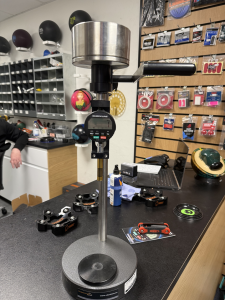
Attached to this news you will find information about how EBF is intenting to handle the Bowling Ball Hardness tests at the EWC2026 in Odense that will start on the 10 June
Statement from the European Bowling Federation (EBF)
Regarding IBF Urethane Bowling Ball Regulation
Further to the recent announcement by the International Bowling Federation (IBF) concerning urethane bowling ball specifications, the European Bowling Federation (EBF) wishes to inform all Member Federations, athletes, coaches, and stakeholders of the following:
The IBF has ruled that, effective immediately for IBF events, only urethane bowling balls manufactured with a minimum hardness of 78D and approved by USBC are permitted. Random hardness checks may be conducted during IBF competitions, and any ball measuring below 72D will be declared non-compliant and removed from competition.
In alignment with this regulation, the EBF confirms that this rule will apply to all European Championships conducted under EBF authority after the European Youth Championships 2026 in Berlin, Germany.
Accordingly, the new urethane ball hardness requirement will come into effect for EBF European Championships starting from 6 April 2026.
The EBF will also conduct random hardness checks during its European Championships. Any ball found to be below the permitted hardness level will be declared non-compliant and removed from competition.
All Member Federations are requested to inform their athletes accordingly and ensure full compliance ahead of future championships.
The official USBC list of non-eligible bowling balls is available here: USBC National Tournament Ineligible Ball List – 78D Slow Oil Only.
Upcoming Procedures and Recommendations
Complete testing procedures and rules will be published soon.
The EBF recommends that all Member Federations and athletes study these upcoming procedures and rules to ensure compliance and avoid disqualifications at future events.
EBT Tour 2026
No changes will apply to the ongoing EBT Tour for 2026. All current events will continue under the existing rules and equipment regulations. This means that athletes participating in the 2026 tour are not required to make any immediate adjustments to their bowling balls or equipment.
Regarding Russian and Belarusian Youth Athletes
The European Bowling Federation (EBF) confirms that it will follow the recommendations of the International Olympic Committee (IOC) and the International Bowling Federation (IBF) regarding youth athletes holding Russian or Belarusian passports.
Accordingly, these athletes will be permitted to participate in EBF and IBF youth events, provided their national federation is in good standing and all standard IBF protocols and regulations are followed.
The biggest tournament in Europe, Ballmaster Open was held from the 2nd of January until the 11th of January 2026 in the magnificint Tali Bowling Centre in Helsinki, Finland.
Total of 1128 entries and re-entries were bowled during the duration of the tournament by 485 players, where of 88 were women.
The score to make the cut to final step 1 was 1390, or 231,67 average.
After three final steps it came down to two semi final matches where all the players were from Finland.
In the first match Santtu Tahvanainen won over Jarno Lahti, who was last year‘s winner with the score of 222 to Lahti‘s 202. Then in the second match Rami Mukkula won over Linus Boström with the score of 216 to Boström‘s 211.
In the final match, Santtu took an early lead with Mukkula struggling to hit the pocket and keep up with Santtu. In the end Santtu proved to be too hard to beat and he became the winner with the score of 204 to Mukkula‘s 170.
This was Santtu Tahvanainen‘s first win on the EBT Tour and he grabbed the top prize of 10,000 euros.
The winner of the women‘s ranking in Finland was Elissa Mehmet, Sweden who was close to making the top 16 but finished eventually in 18th place.

The 2025 International Bowling Federation (IBF) World Seniors & Grand Seniors Championships wrapped up at the National Bowling Stadium in Reno, Nevada, celebrating an exciting week of world-class bowling. Athletes from 37 nations competed in spirited fashion across all events, with European bowlers delivering outstanding performances and securing numerous medals in both the Senior and Grand Senior divisions.
While Team USA led the overall medal tally, Europe demonstrated remarkable consistency and depth, earning podium finishes across nearly every category and reaffirming its strong presence on the global stage.
Senior Division – European Success Stories
Europe made a powerful impression in the Senior Division, with several countries capturing gold and multiple podiums.
- Germany emerged as one of the standout nations:
- Manuela Oing claimed Gold in Women’s Singles as well as Michaela Gobel-Jancka secured Bronze.
- Bodo Konieczny and Michael Kramer took Gold in Men’s Doubles.
- Team Germany added a Bronze in both the Men’s Team event and Women´s Team event as well as another Bronze in the Women’s Doubles by Martina Beckel and Michaela Gobel-Janka.
- Martina Beckel finaly claimed the Bronze in Women´s Masters.
- Italy also delivered an exceptional showing:
- Maurizio Celli and Marco Reviglio earned Silver in Men’s Doubles.
- Maurizio Celli went on to claim Bronze in the Men’s All-Events category.
- Alessandra Morra secured Silver in the Women´s Master.
- Belgium’s legendary Gery Verbruggen captured Bronze in Men’s Singles, while the Belgian men’s team joined Germany on the Men´s Team Bronze podium.
- Netherlands secured Silver in Men´s Teams competition.
- Finland continued its strong bowling tradition with Reija Lunden and Jaana Taavitsainen bringing home Bronze in Women’s Doubles.
Grand Senior Division – European Veterans Dominate
Europe’s Grand Seniors showcased their skill and experience with medal-winning performances across all disciplines:
- England led the European charge with multiple golds:
- Gary Baker and Kim Johnson won Men’s Doubles Gold, and
- Angie Brown and Diane Johnson secured Women’s Doubles Gold.
- Gary Baker won the Men´s All Event Bronze and
- Kim Johnson claimed the Men´s Silver in the Men´s Masters
- Angie Brown also claimed Women’s Masters Gold and Women’s All-Events Bronze, highlighting an extraordinary championship performance.
- France continued its rich tradition in senior bowling:
- Jacqueline Faure struck Gold in Women’s Singles, as well as Pepita Jacques added Bronze
- Yvan Augustin and Serge Frouvelle secured silver in Men´s Doubles.
- Team France earned Silver in the Women’s Team event
- Jacquelin Faure also claimed the Women´s all Events Silver
- Pepita Jacques finaly secured Women´s Masters Bronze.
- Germany’s Peter Knopp collected Silver in Men’s Singles, added another Bronze in Men’s Doubles together with Ralf Graewe and finally had Bronze in Men´s Masters.
- Czech Republic captured a notable Bronze in the Women’s Team event, while Iceland proudly joined them for Bronze in the Women´s Team. — a historic achievement for both nations.
A European Bowling Powerhouse
From Germany’s gold-medal runs to France’s elegant consistency and England’s veteran mastery, European bowlers reaffirmed their elite standing in the international arena. Their achievements underscore Europe’s ongoing commitment to developing excellence and fostering the sport across all age categories.
The Norwegian Open 2025 by Storm was held from the 22nd of August until the 7th of September 2025 in Lucky Bowl Veitvet in Oslo, Norway.
Total of 435 entries and re-entries were bowled during the duration of the tournament by 170 players, where of 42 were women.
After four final steps it came down to a four player stepladder final.
In the first match, Christer Aker from Norway won over William Svensson from Sweden with the score of 258 to Svensson‘s 205.
In the second match, Aker was defeated by Nora Johansson from Sweden with the score of 184 to Johansson‘s 194 (186+8).
In the final match it was Johansson against Carl Eklund from Sweden as well. There it was Johansson that came out on top with the score of 229 (221+8) to Eklund‘s 191.
This is Johansson‘s first win on the tour! Congratulations Nora!
The complete ranking after Norwegian Open can be seen here: Women | Men